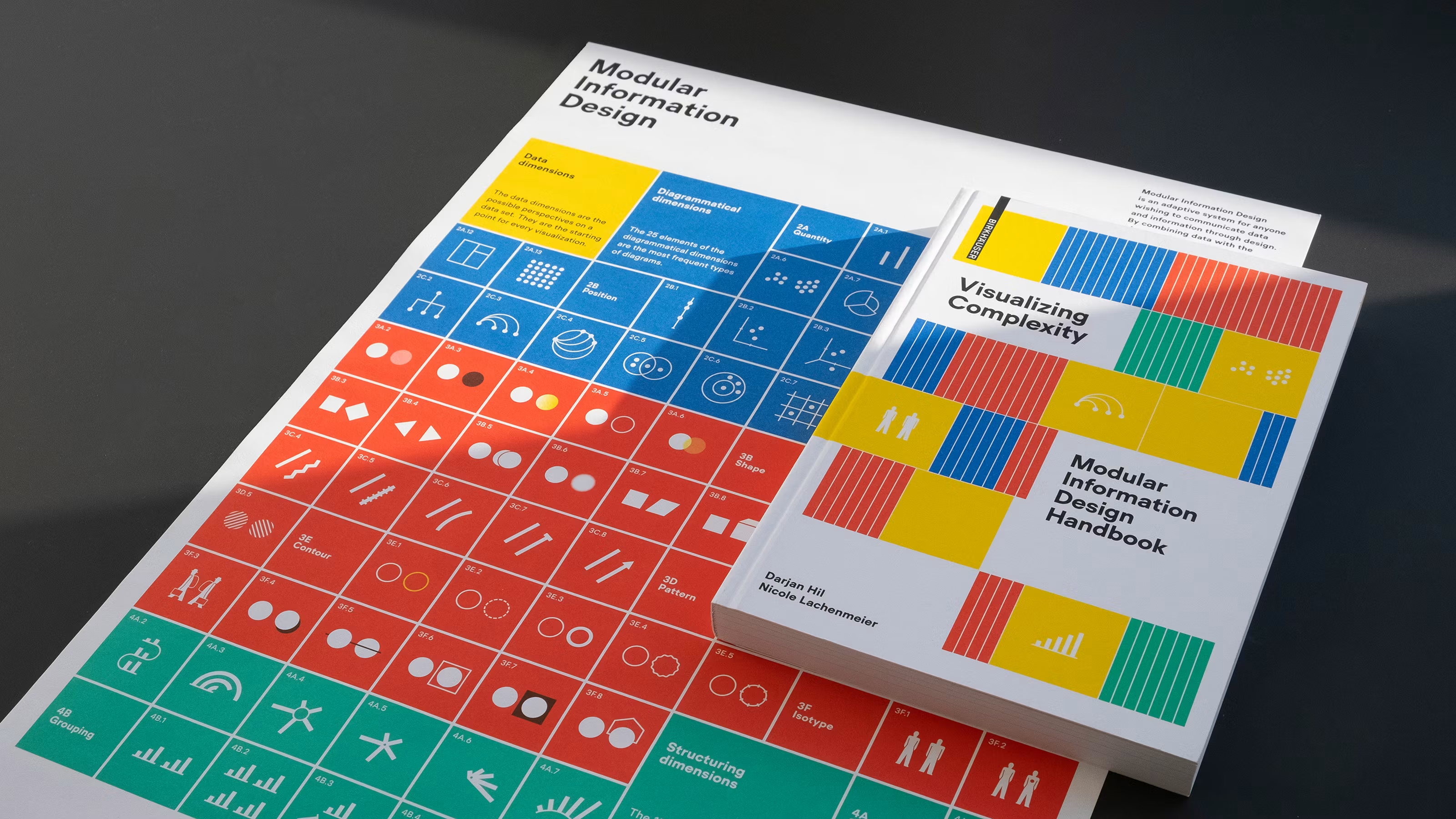
Session information
Sessions take place Thursdays, 8.15-9.45, Biozentrum, Hörsaal U1.131.
| # | Date | Topic | Instructor(s) | Material | Exercise |
|---|---|---|---|---|---|
| 1 | 17.09.2026 | What is science communication? | Mata | ||
| 2 | 08.10.2026 | Models and elements of science communication | Mata | ||
| 3 | 15.10.2026 | Scientific uncertainty and trust in science | Mata | ||
| 4 | 22.10.2026 | Guidelines for science communication | Mata | ||
| 5 | 29.10.2026 | Science communication in practice | Mata | ||
| 6 | 05.11.2026 | Why do we visualize? | Hil/Lachenmeier | ||
| 7 | 12.11.2026 | Structured content | Hil/Lachenmeier | A | |
| 8 | 19.11.2026 | Content dimensions and categorization | Hil/Lachenmeier | B | |
| 9 | 26.11.2026 | The identity of a dot | Hil/Lachenmeier | C | |
| 10 | 03.12.2026 | Networks and relationships | Hil/Lachenmeier | D | |
| 11 | 10.12.2026 | Visual language and cultural context & Areas and hierachies | Hil/Lachenmeier | E | |
| 12 | 17.12.2026 | Exam |
Course description and learning goals
This course aims to give a broad introduction to science communication. By completing the course you can expect to…
- Get an overview of theories and principles of science communication
- Learn to critically evaluate and reflect on science communication
- Learn to develop visual communication strategies for different audiences and purposes
- Apply these principles hands-on, over the whole semester, to a real Swiss popular vote that you choose and follow from start to finish
This website is designed to help course participants get an overview of the course and the course slides (slides will be uploaded shortly after each session). Additionally, a FORUM is available on ADAM.
Course grading
The final grade for the course will be based on two components:
Exam (55%)
At the end of the semester, a multiple-choice exam will test your understanding of core concepts covered in lectures and readings. You can find information about the location and time of the exam in the course directory.
Exercises (45%)
Practical exercises will apply the principles learned in class to hands-on tasks. Both the timely submission and the quality of your work will be critical in determining a pass/fail for each exercise. Exercises should be submitted via ADAM.
Exercises A-E (5 assignments, 9% each)
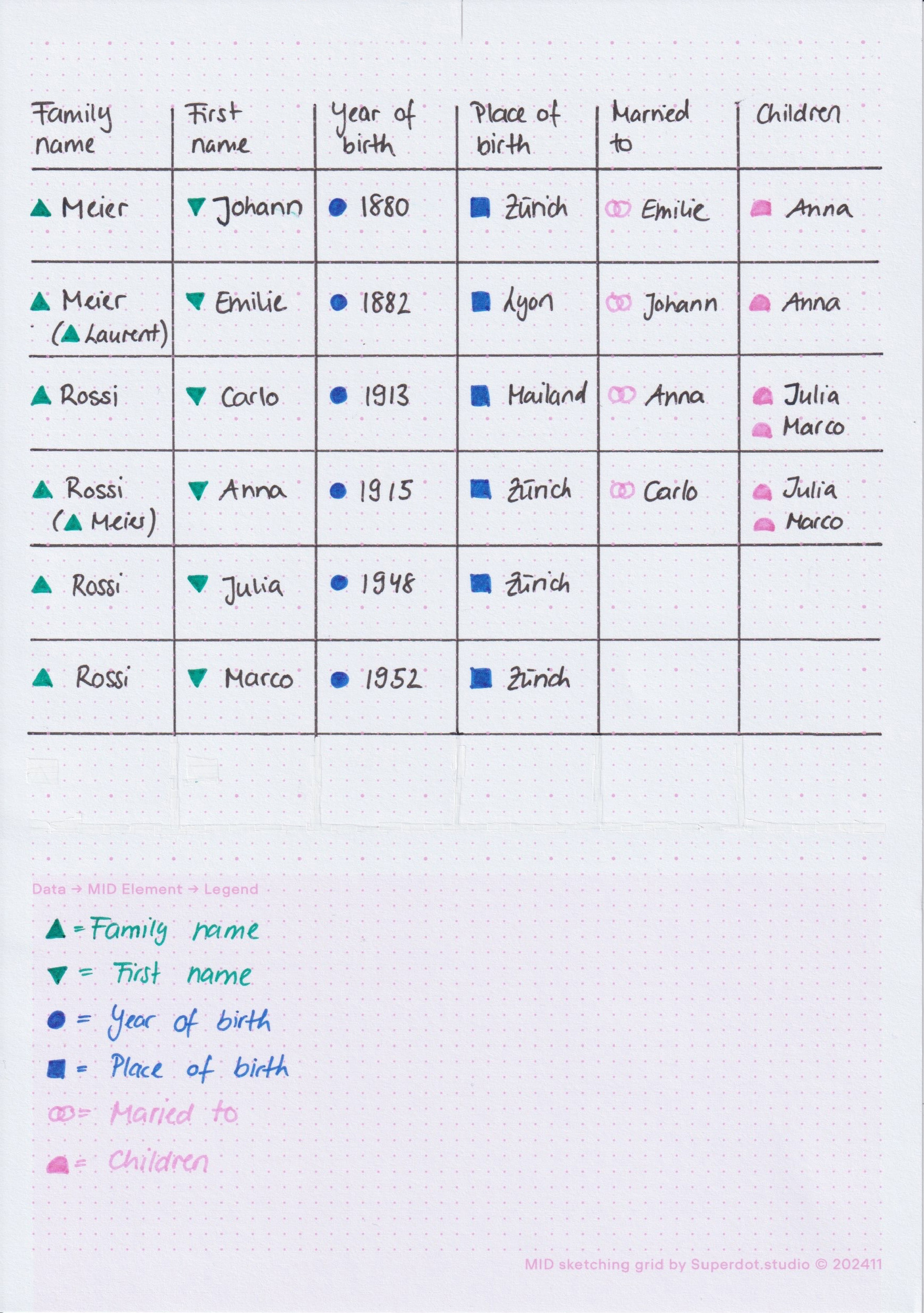
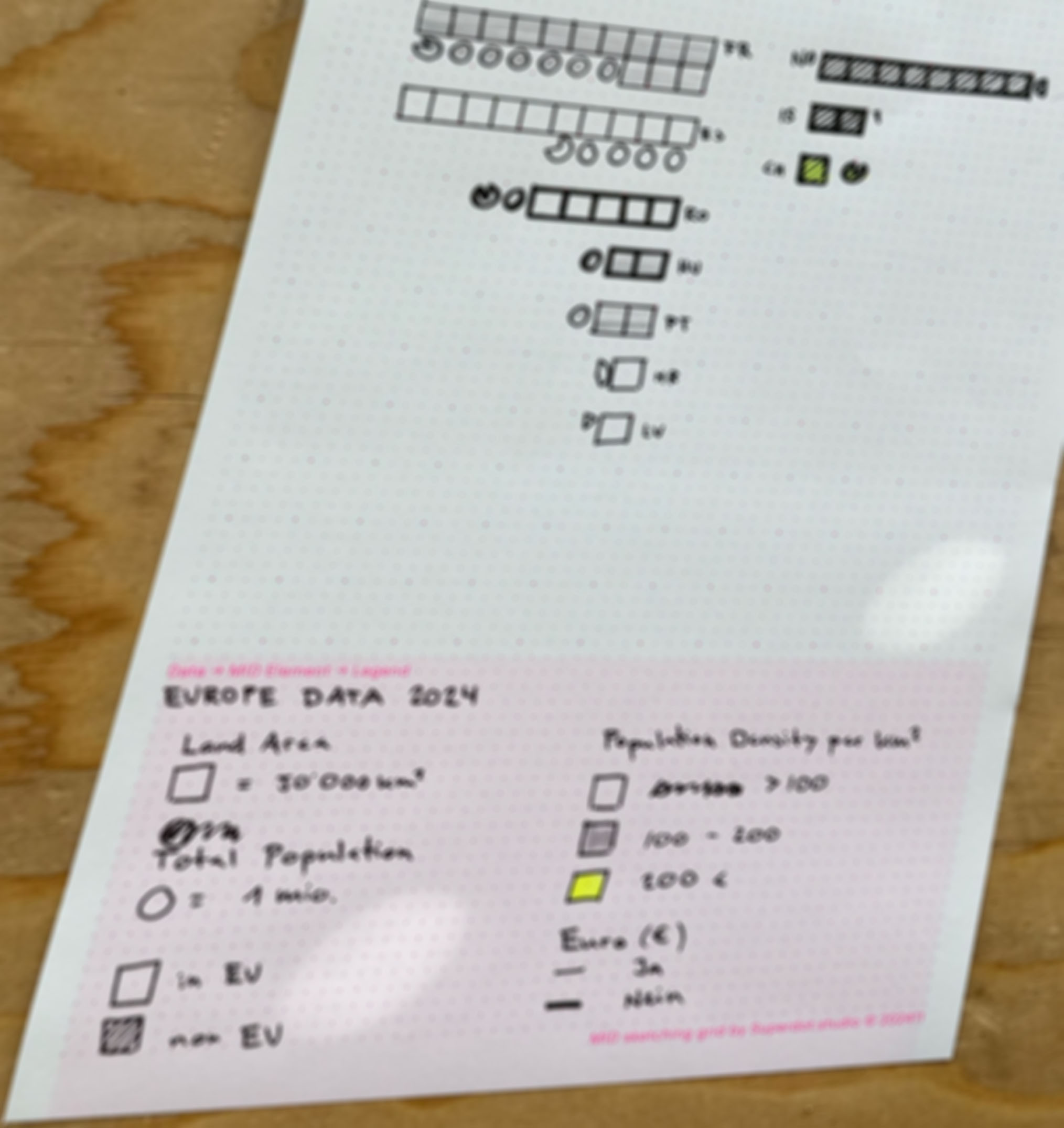
Starting in Session 6, you will choose one completed Swiss popular initiative (Volksinitiative) with available campaign poster material and follow it through all five exercises. You are welcome to use AI to research and prepare your data — but every visualization must be drawn by hand, so that you experience the process yourself and can reflect on the decisions you made. “Drawing by hand is thinking” is an approach that combines creative and analytical thinking: by drawing manually, you develop a deeper understanding that is independent of digital tools and applicable in studies, research, and practice. For each of the 5 exercise assignments, you will have until the following session to submit your work (see ADAM for the specific deadlines). Please make sure to scan your drawings well and submit them as a JPEG or PNG file. Poorly scanned sketches or PDF files will not be accepted.
Recommended readings
“50 Essentials on Science Communication” edited by Jean Paul Bertemes, Serge Haan, and Dirk Hans.
“Visualizing Complexity: Modular Information Design Handbook” by Darjan Hill and Nicole Lachenmeier.